What to pack for Antarctica Cruise Trips
You may be surprised: packing for Antarctica is not just about extreme cold. On an expedition cruise, you are often moving between a warm ship, windy decks, wet Zodiac landings and exposed shore visits, sometimes all in the same morning. That is why knowing what to pack for Antarctica cruise travel is less about stuffing a suitcase with thick jumpers and more about choosing the right layers, fabrics and practical extras.
If you pack well, you stay comfortable, dry and free to enjoy the experience. If you pack badly, even a spectacular landing among penguins can become a battle with numb fingers, damp socks or fogged-up glasses. The aim is simple - stay warm without overheating, and stay dry without carrying half your wardrobe to the end of the world.
What to pack for Antarctica cruise weather
Conditions vary quickly, but its best to think about layers that can be adjusted quickly. You may be standing still on deck watching whales one moment, then climbing in and out of a Zodiac the next.
Base Layers
Your base layers matter more than people expect. Merino wool or high-quality synthetic tops and leggings help regulate temperature and manage moisture. Cotton is best left at home, because once it gets damp it stays cold. Two or three base layer sets are usually enough for most voyages, especially if your ship has laundry or you are happy to re-wear items.
Mid Layers
Over your base layers, add a mid-layer such as a fleece or lightweight insulated jacket. This is the piece that keeps you comfortable on cold days without forcing you into one bulky outfit. Some travellers run warm and prefer a lighter fleece. Others, especially if they spend long periods out on deck, benefit from a down or synthetic insulated layer under their outer shell.
Outer Layer
Your outer layer is where expedition cruising becomes more specific. Many operators provide a waterproof expedition parka, often as part of the fare, and some let you keep it. That can reduce what you need to bring from home. You will still want waterproof overtrousers, because Zodiac spray, snow and slush can soak ordinary walking trousers very quickly.
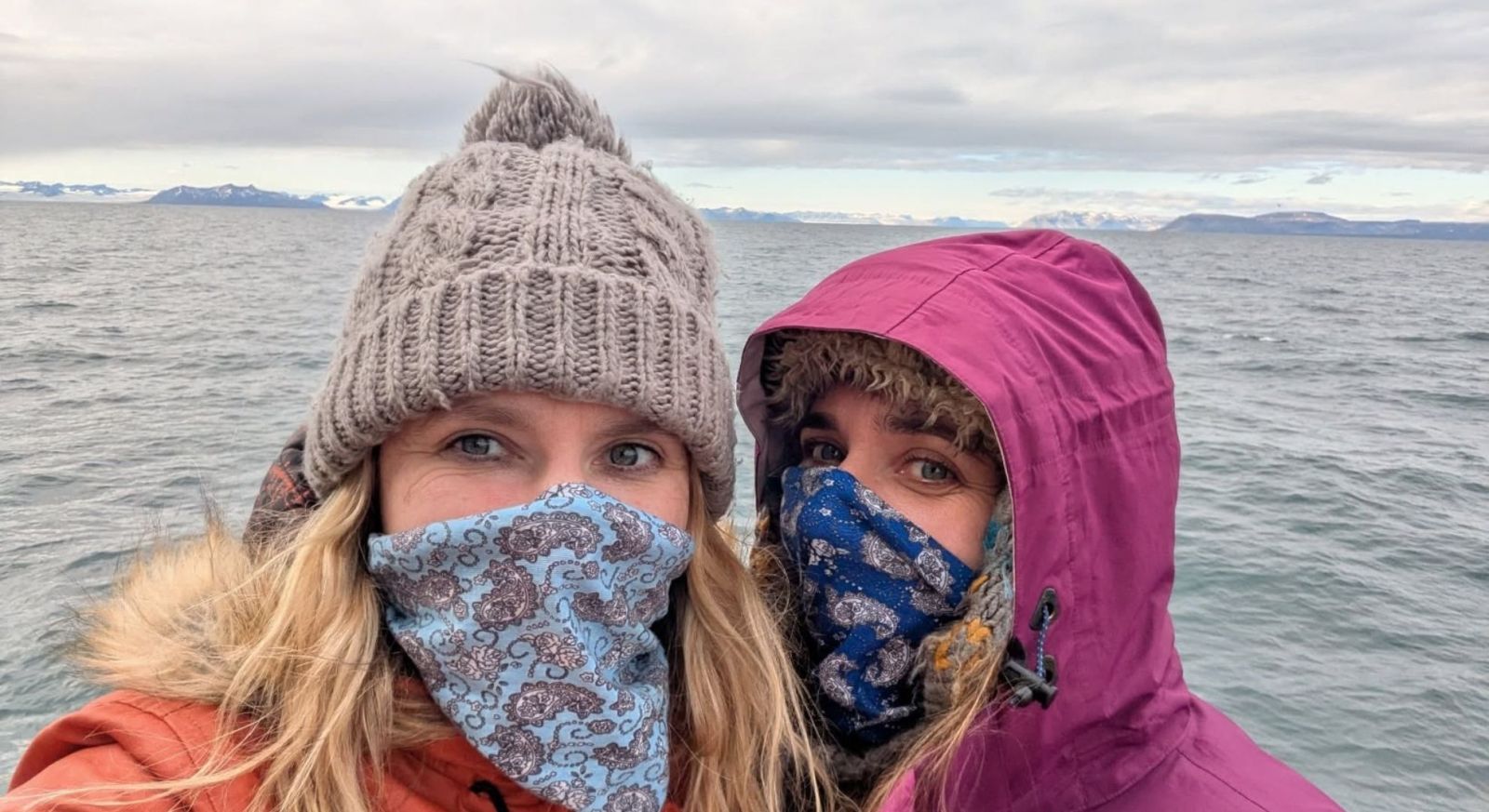
Sarah & Nicola from Mapping Your Travel in The Arctic!
The clothing that earns its place
For most people, the best packing list is not especially glamorous. It is practical, compact and built around reusing a few solid pieces. A couple of thermal tops, two thermal leggings, two fleeces, waterproof trousers, comfortable ship clothes and enough underwear and socks for the voyage will cover the essentials.
Trousers for the ship should be comfortable and easy to layer over thermals if needed. Jeans are not ideal for excursions because they get cold and stiff if damp, but they are fine for evenings onboard. Casual wear is the norm on most expedition ships, so there is rarely any need for formal outfits unless your operator specifies otherwise.
Hands, Feet & Head
Socks deserve more thought than they usually get. Warm wool or technical hiking socks are far better than everyday cotton pairs. Pack several, because dry feet make a remarkable difference in polar conditions. Some travellers like a thinner liner sock underneath, particularly if they are prone to cold toes.
Gloves are another area where one pair often is not enough. Dexterity matters when you are handling cameras, binoculars or jacket zips, so a liner glove paired with a warmer waterproof glove or mitten often works better than one thick pair. Mittens are usually warmer, but gloves can be more practical.
A warm hat that covers your ears is essential, and a buff or neck gaiter is often more useful than a scarf. It stays in place, packs easily and offers welcome protection from wind. Sunglasses are also a must. Snow glare can be surprisingly strong, even on overcast days.
Footwear for landings and life on board
Footwear is one of the most common areas of confusion. For shore landings, most expedition cruise operators either provide insulated waterproof boots or include boot hire. These are usually suitable for Antarctic conditions and designed for wet Zodiac entries. Before buying anything expensive, ask us what is included in your cruise fare.
If boots are supplied, you mainly need comfortable shoes for the ship itself. Trainers or lightweight walking shoes are usually ideal indoors and on deck in calmer conditions. Slippers can be nice in your cabin, but they are a comfort rather than a necessity.
What to pack for Antarctica cruise excursions
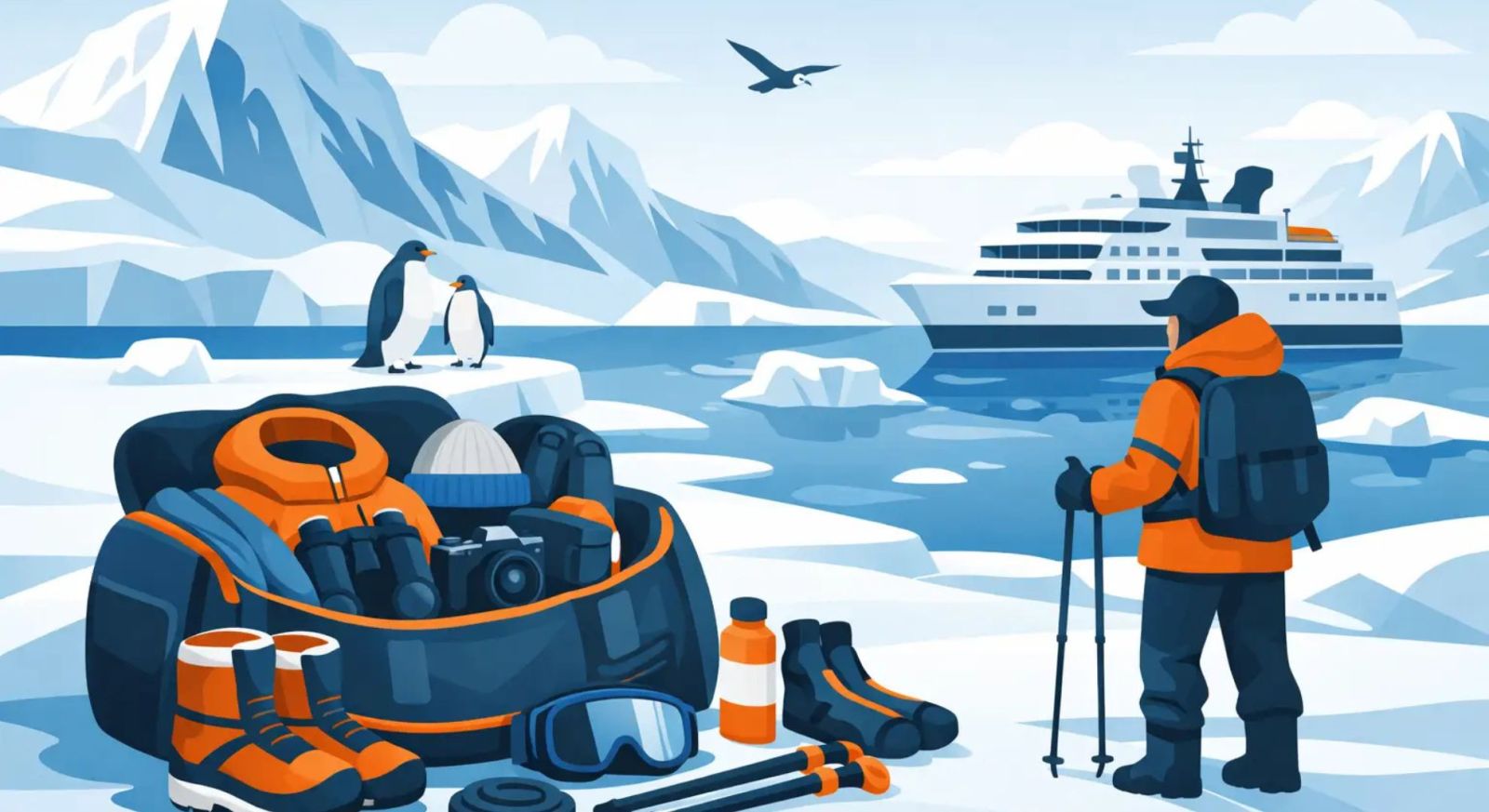
Excursions are where small details become important. A dry bag is one of the most useful items you can bring. It protects your camera, mobile phone, spare gloves and extra layer during Zodiac rides, and it is far easier than wrestling with a standard daypack in wet conditions.
Binoculars are well worth packing if wildlife is a big part of the trip for you. Whales, seabirds and distant ice formations are far more rewarding when you are not relying only on the naked eye. A good camera is wonderful, but binoculars often get used more often than people expect.
If you wear glasses, consider how they perform in cold and wet weather. Anti-fog wipes can help, and a glasses strap is a simple addition that becomes valuable in wind. For contact lens wearers, dry ship air and cold conditions can be irritating, so bring any eye drops you normally use.
You will also want a reusable water bottle. Polar air can be dry, and even when you do not feel sweaty, hydration matters. Lip balm and a rich moisturiser earn their place too. The combination of cold, wind and heated indoor spaces can be hard on skin. I felt this in Svalbard, my skin became so dry & I was so pleased that the hotel room contained a moisturiser gift.
The things people forget
Most Antarctica packing lists focus on jackets and thermals, but the forgotten items are often the ones that make the biggest difference. Seasickness tablets or bands are a good example, especially if your route includes the Drake Passage. Even seasoned travellers can feel it, and it is far easier to have remedies with you from the start.
A UK plug adaptor may be needed depending on your ship, and a small power bank can be useful for long days of photography. Spare memory cards and batteries matter more in Antarctica than on an ordinary cruise. Cold weather can drain batteries faster, and you do not want to ration photographs on a once-in-a-lifetime voyage.
Pack any medication in your hand luggage, along with a day or two of essentials in case checked luggage is delayed en route to embarkation. This applies to all big trips, but especially to expedition departures where replacement options can be limited.
What not to pack
Overpacking is easy on an Antarctica cruise. Travellers often bring too many heavy knitwear pieces, too many casual outfits and too many just-in-case items that never leave the bag. Bulky jumpers take up space and are often less effective than thinner technical layers.
Hand warmers can be useful for some travellers, but they are not essential for everyone. The same goes for specialist photography gloves, walking poles and expensive extreme-cold gear.
The best approach is to pack for the trip you are actually taking. A shorter Antarctic Peninsula voyage in the austral summer has different demands from a longer trip with kayaking, camping or time in South Georgia and the Falklands. This is where tailored advice matters. At Mapping Your Travel, we often help clients understand what is already provided by their chosen operator, which prevents unnecessary spending and a lot of suitcase regret.
A well-packed Antarctica suitcase should feel reassuring, not excessive. If every item has a purpose and works with the others, you are in good shape. And when you are standing on deck watching blue ice glow in the late light, you will be very glad you packed for the experience, not just the temperature.
Book an Antarctica Expedition Cruise Consultation call today!